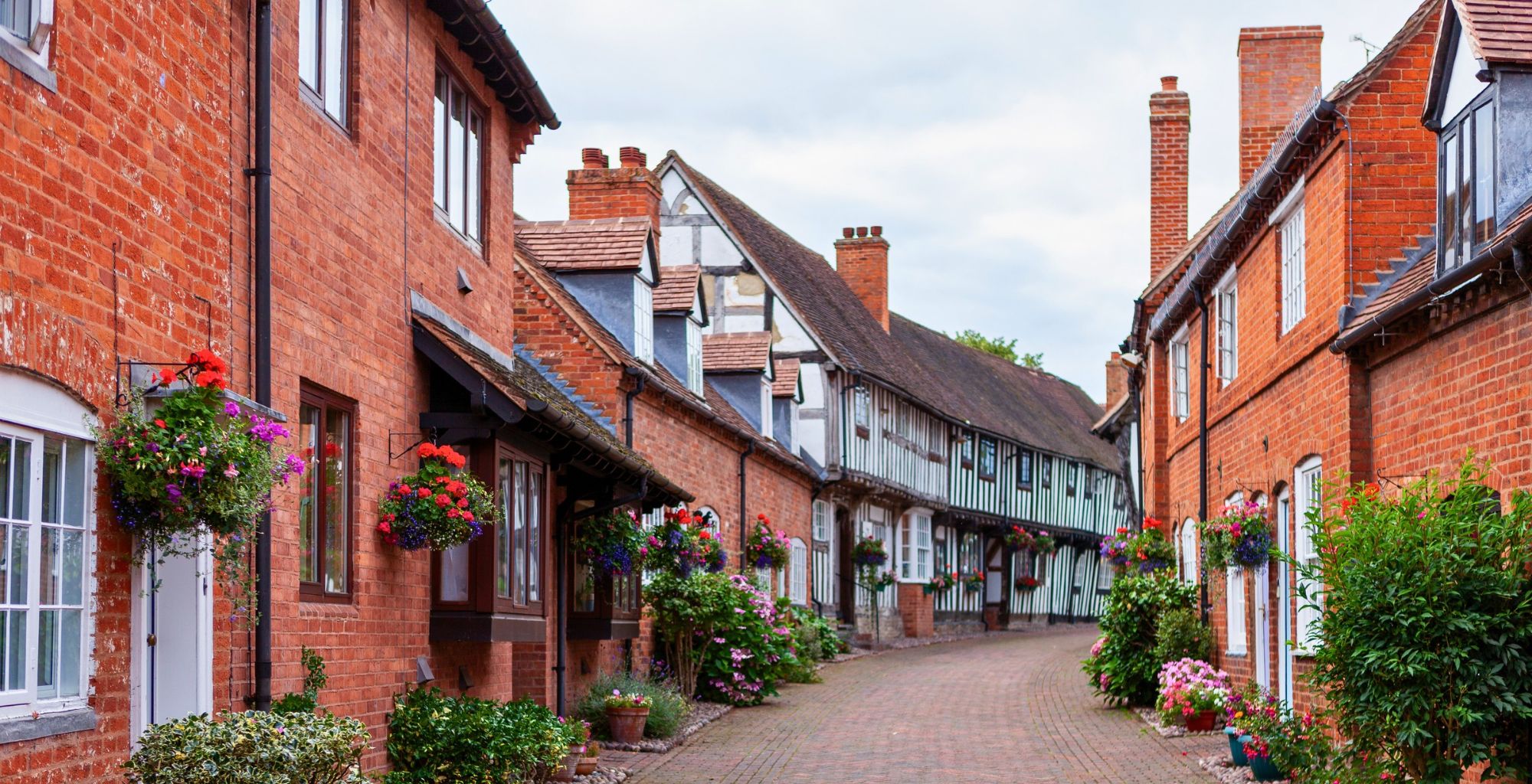
Living in Alcester: Two rivers, two thousand years and a working high street
Living in Alcester offers historic architecture, independent shopping and ready access to the Warwickshire countryside.
Set where the River Arrow meets the River Alne, this market town lies around eight miles west of Stratford-upon-Avon, close to the Worcestershire border.
Its timber-framed streets and surrounding villages appeal to families, professionals and downsizers relocating from London, the South East and Birmingham’s suburbs, particularly those considering alternatives to Stratford-upon-Avon and Henley-in-Arden.
The 2021 Census recorded 6,421 residents in the built-up area, giving Alcester an intimate scale.
Two thousand years at the river crossing
Alcester is a market town in the Stratford-on-Avon District, with a history extending back to the Roman occupation.
A fort was established around the middle of the first century AD, followed by a settlement which developed into a trading centre on Icknield Street. Among Britain’s most extensively excavated Roman towns, Alcester’s archaeological finds can be explored at the Roman Alcester Museum in Globe House, Priory Road.
A Benedictine abbey founded in 1138 was later absorbed by Evesham Abbey and disappeared following the Dissolution. Field names near Priory Road preserve its memory.
The Grade I listed Town Hall, built between 1618 and 1641, has a hammer-beam roof in its upper hall.
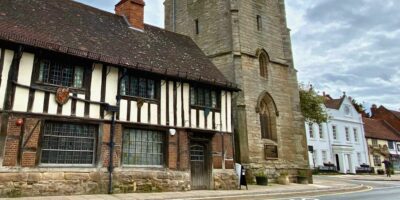
Nearby, Grade II* listed St Nicholas Church features a clock positioned on the corner of its 14th-century tower, visible from the High Street.
Alcester’s Court Leet maintains centuries-old traditions, electing a High Bailiff each October and preserving customs including ale-tasting and bread-weighing. It also organises a June charity street market. The charter mop fair occupies High Street, Church Street and Henley Street on the first Monday and Tuesday of October.
The property market: character and mix
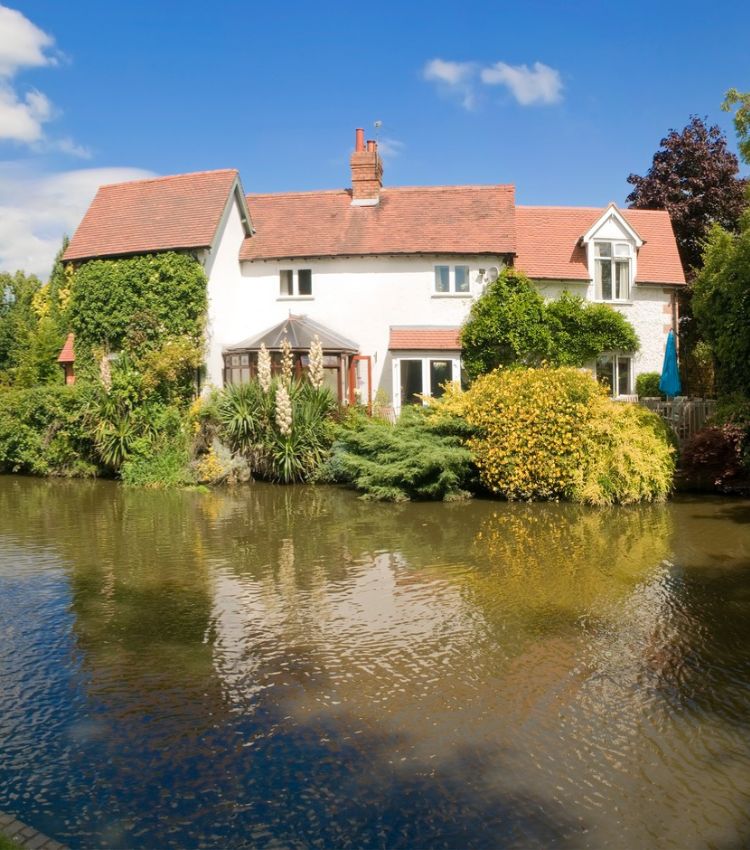
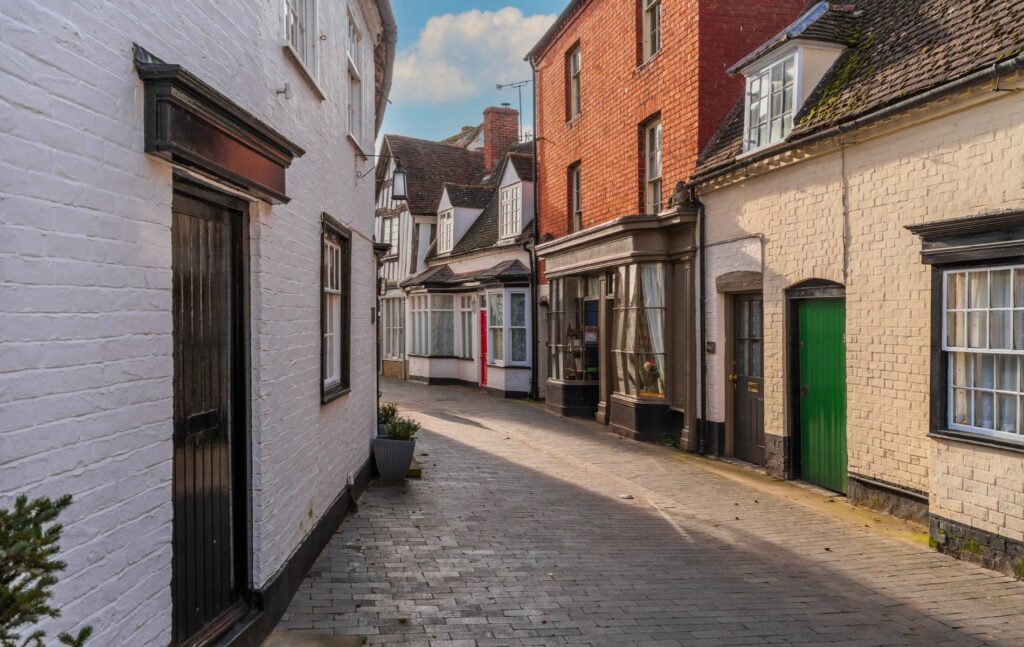
Alcester’s housing stock ranges from centuries-old timber-framed cottages and Georgian townhouses to established family homes and contemporary developments.
The historic centre provides much of the architectural interest. Among its oldest buildings is the Old Malthouse, at the corner of Church Street and Malt Mill Lane, dating from around 1500.
Period houses can offer distinctive interiors and architectural features, although listed status, maintenance requirements and restrictions on alterations should be borne in mind.
Twentieth-century properties often provide more conventional layouts, gardens and off-street parking.
Newer developments broaden the choice for buyers seeking contemporary accommodation with potentially lower maintenance commitments.
Alcester’s riverside position needs consideration. Low-lying streets have benefited from an Environment Agency flood alleviation scheme, although such works reduce rather than remove the risk, and buyers should investigate flood exposure at individual addresses, starting with the Environment Agency’s long-term flood risk service.
For a broader perspective on the county’s housing, see Property in Warwickshire.
Where to live
Choosing where to live in Alcester involves more than finding an appealing property.
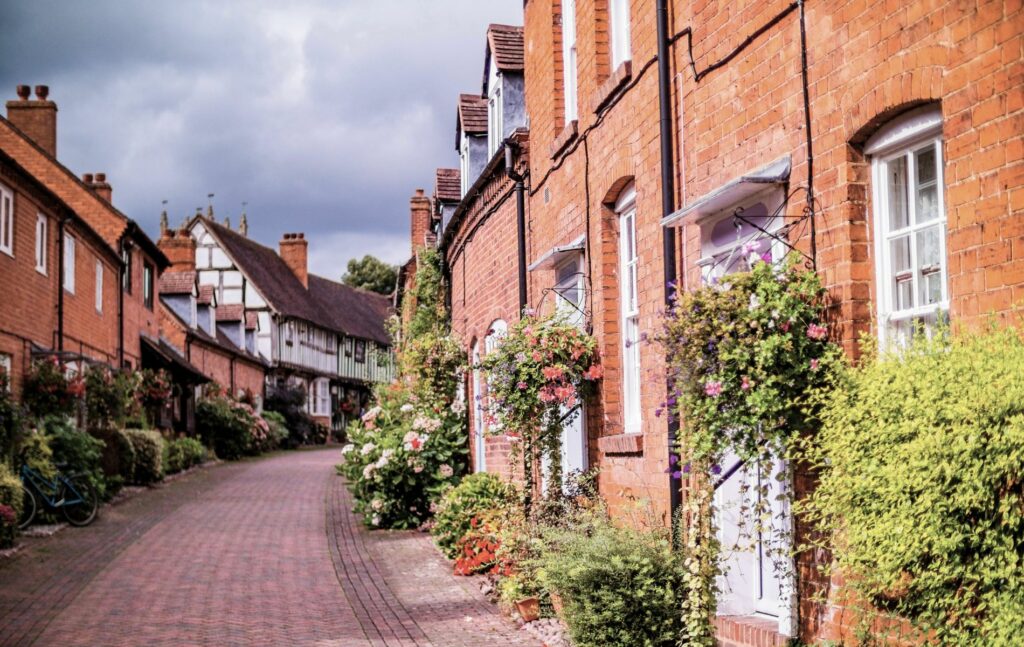
The historic heart of Alcester encompasses High Street, Butter Street, Church Street, Henley Street and Malt Mill Lane, with shops, cafés and everyday amenities within easy walking distance. Narrow passages off the High Street, known locally as ‘cheweries’, are a distinctive feature of the town’s historic street pattern.
The northern and western edges of Alcester offer established residential neighbourhoods. Alcester Park, off Allimore Lane on the north-western edge, provides newer housing near King’s Coughton.
To the south, Oversley Green lies across the River Arrow, within walking distance of the town centre. Further south, Arrow and Wixford occupy countryside near Ragley, while Temple Grafton and Ardens Grafton stand on higher ground. Bidford-on-Avon, a larger village beside the Avon, offers its own amenities.
To the north and east, Kinwarton, Coughton, Great Alne and Aston Cantlow are among the surrounding villages, with countryside extending towards the Forest of Arden. Across the Worcestershire border, Inkberrow, approximately five miles west, offers another alternative, centred around its village green.
Those considering a wider search may also find Inside the Warwickshire Golden Triangle useful.
Everyday life: the High Street and beyond
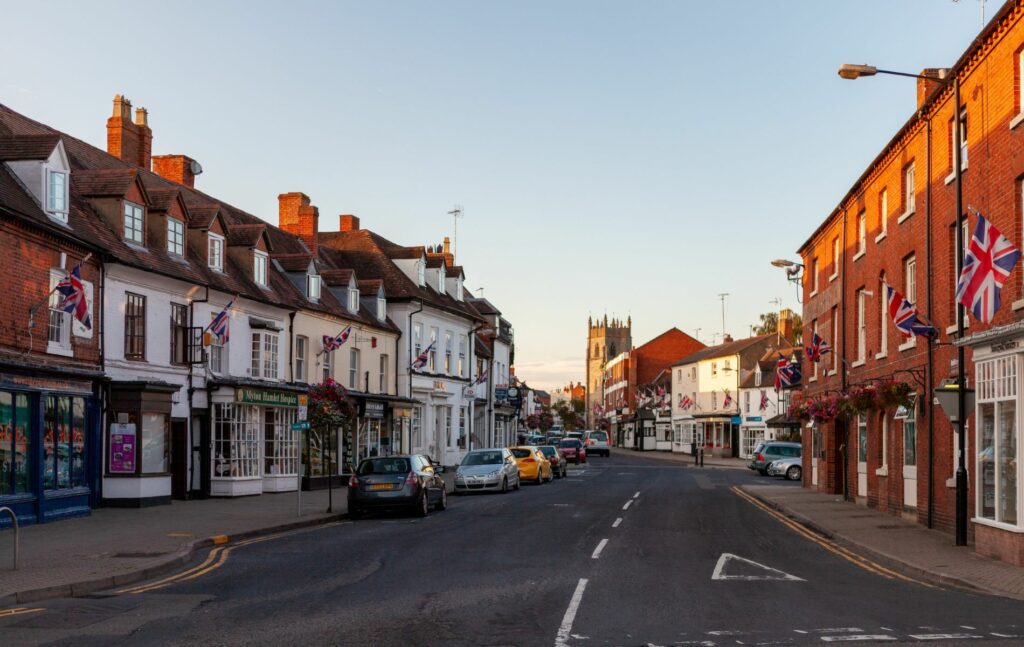
One of the attractions of living in Alcester is its working High Street, with independent shops, cafés, long-established pubs and a Waitrose serving everyday needs.
The Alcester and Forest of Arden Food Festival brings local producers into town, while the Greig Centre on Kinwarton Road provides leisure and community facilities.
Two significant country houses are nearby. Ragley Hall, approximately two miles south-west, is a Grade I listed Palladian house begun in 1680 to designs by Robert Hooke. Set within Capability Brown parkland, it remains the home of the Marquess of Hertford and opens seasonally.
Two miles north, Coughton Court has been associated with the Throckmorton family for more than 600 years. Now cared for by the National Trust, its Tudor history includes connections to the Gunpowder Plot. The Trust also looks after Kinwarton Dovecote on Alcester’s northern edge.
For walking, Oversley Wood rises south of town, while the 100-mile Millennium Way follows the High Street and riverside paths beside the Arrow, and the Heart of England Way also passes through the town.
Connectivity: the honest picture
Alcester has no railway station, so regular rail commuters must travel to a neighbouring town.
Redditch, around nine miles away, provides frequent Cross-City services to Birmingham New Street, taking roughly 40 minutes. Stratford-upon-Avon, approximately eight miles east, offers Birmingham connections and services to London Marylebone, usually with a change at Leamington Spa. Evesham, around 11 miles away, is on the Cotswold Line to London Paddington, with the journey taking around 2 hours.
Each option serves a different commuting pattern, making parking, onward connections and service frequency important factors.
The A46 runs past Alcester towards Stratford-upon-Avon and connections with the M40, and the M5 at Junction 9. The A435 heads north towards the M42 at Junction 3.
Birmingham is approximately 40 to 50 minutes away by car, with Birmingham Airport around 35 to 45 minutes, depending on traffic.
Our guide to Commuting from Warwickshire explores the wider regional picture.
Schools
Alcester offers selective, non-selective and faith-based secondary education.
Alcester Grammar School is co-educational and selective, serving pupils aged 11 to 18. Entry involves the West Midlands Grammar Schools 11+ test, with a defined priority area forming part of its admissions arrangements.
Alcester Academy provides non-selective education for ages 11 to 16, while St Benedict’s Catholic High School serves ages 11 to 18 and applies faith-based admissions criteria.
Primary options within town include St Nicholas Church of England Primary School and Our Lady’s Catholic Primary School, which applies faith-based admissions criteria, with village schools in Great Alne, Coughton, Temple Grafton, Haselor and Bidford-on-Avon.
Catchment and priority-area boundaries are reviewed periodically by the local authority and can change, and living close to a school does not guarantee a place. Families should confirm current requirements directly with schools and Warwickshire County Council before purchasing.
Living in Alcester: finding the right home
Alcester has plenty to offer, from characterful period houses in the town centre to family homes and village properties in the surrounding countryside. But choosing where to buy isn’t simply about finding a house you like. The location, local market and practicalities of everyday life all need to be considered.
This is where Charlotte Sharpe, Garrington’s regional partner, can help, identifying properties that meet your requirements, offering an informed view of their suitability and negotiating on your behalf. She can also introduce you to locations you might not previously have considered.
If you’re thinking of moving to Alcester or one of its nearby villages, Charlotte would be delighted to discuss your plans and help you find the right home. Please get in touch.
Frequently asked questions about living in Alcester
Is Alcester a good place to live?
Alcester is a compact Warwickshire market town with a largely independent High Street, a medieval core of timber-framed streets and three secondary schools. Ragley Hall, Coughton Court and Oversley Wood are on its doorstep and Stratford-upon-Avon is around eight miles away. The main trade-off is the lack of a railway station, with the main rail options at Redditch, Stratford-upon-Avon and Evesham.
Is Alcester a town or a village?
Alcester is a market town. It has been a trading settlement since Roman times, still holds an annual charter mop fair and has its own town council and Court Leet. The 2021 Census recorded 6,421 residents in its built-up area, which gives it the scale of a small town rather than a village.
Does Alcester have a train station?
No. Alcester’s branch line closed in the mid-20th century. The most useful nearby stations are Redditch, for frequent services to Birmingham New Street; Stratford-upon-Avon, for Birmingham and for London Marylebone, usually changing at Leamington Spa; and Evesham, on the Cotswold Line to London Paddington. Each is roughly eight to eleven miles by road.
Which secondary schools serve Alcester?
Alcester has three state secondary schools: Alcester Grammar School, a selective 11 to 18 school with entry by the 11+ and a priority area; Alcester Academy, a non-selective 11 to 16 school; and St Benedict’s Catholic High School, an 11 to 18 school with faith-based admissions criteria. Catchment and priority-area boundaries are reviewed periodically by the local authority and can change, and living close to a school does not guarantee a place. Buyers should confirm current arrangements with the school or Warwickshire County Council before purchasing.
What is Alcester known for?
Alcester is known for its Roman origins, its timber-framed streets, including Malt Mill Lane and Butter Street, and its Grade I listed Town Hall. It is also one of the few English towns where a Court Leet still meets, electing a High Bailiff each year and keeping customs such as ale tasting and bread weighing alive.