Living in Wallingford: A Guide for Property Buyers
Living in Wallingford is one of those decisions that tends to make more sense the closer you look.
Visitors who arrive expecting a pleasant but unremarkable Thames-side town tend to leave with a rather different impression. In Garrington’s Best Places to Live 2026 report, it ranked first in Oxfordshire and 42nd nationally, and those who know the town well will tell you that result is anything but accidental.
Living in Wallingford means something specific: a town with genuine historical depth, a river on its doorstep, and a daily pace that London commuters rarely expect to find within easy reach of Paddington station.
A town with genuine character
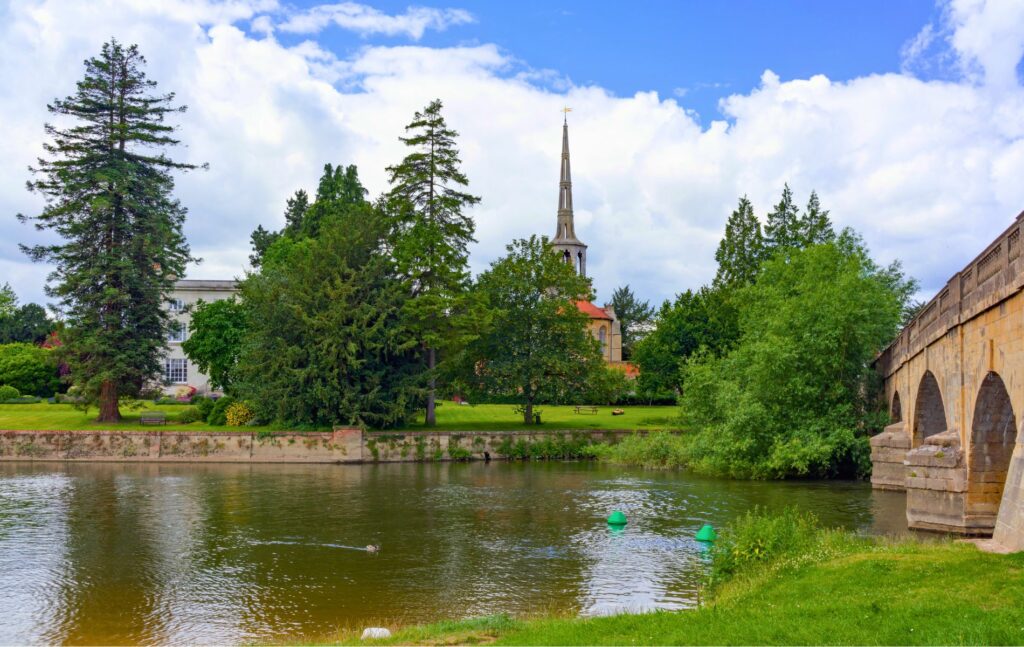
Few market towns in the South of England carry as much history as Wallingford. Its Saxon origins make it one of England’s more historically intact fortified towns, and the medieval street plan, castle ruins, and abundance of listed buildings give the conservation area a coherence that can be hard to replicate.
That heritage is not merely decorative. It shapes the texture of daily life in ways that are quietly felt rather than loudly announced.
The market square, where markets have been held since Saxon times, remains the social centre of the town.
The surrounding streets contain independent retailers, bookshops, and cafés that have resisted the homogenisation affecting so many comparable towns. There is a library, a theatre, a leisure centre, and enough going on at any given time to make the town feel genuinely alive rather than merely preserved.
Agatha Christie lived at Winterbrook House on the edge of Wallingford until she died in 1976, and her connection to the town remains a real part of its identity.
Wallingford has also served as the fictional Causton in the long-running television series Midsomer Murders, a distinction its residents tend to regard with affectionate amusement.
The natural setting
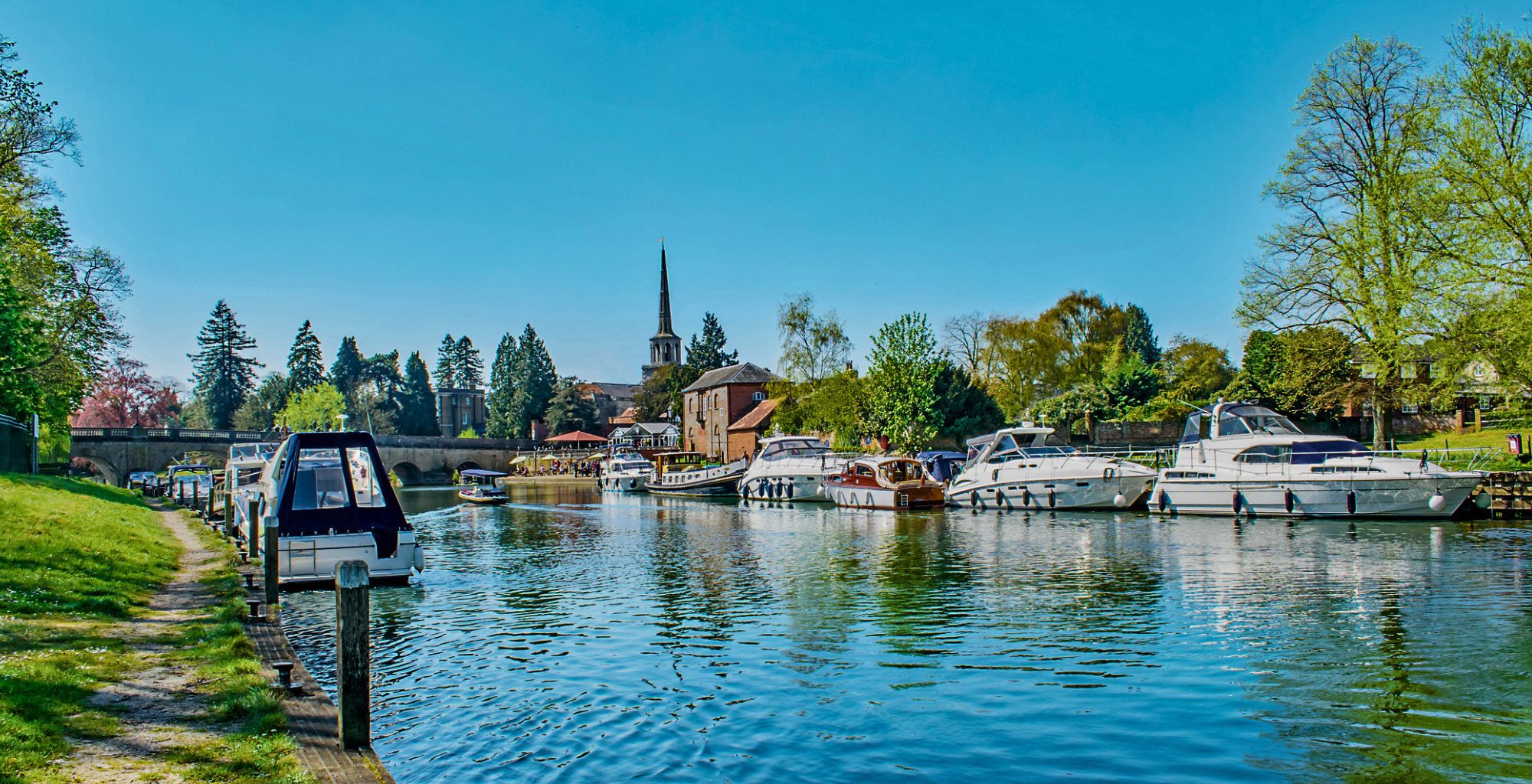
The Thames defines Wallingford’s eastern edge and much of its character. The river walk north toward Benson and south toward Cholsey offers the kind of accessible countryside that buyers from London or Reading are often astonished to find so close to a lively market town.
The Kinecroft, a large open green within the town itself, provides an unusual amount of open space for a settlement of this size.
Beyond the town, the Chilterns National Landscape begins within a few miles, with walking and cycling routes that extend across one of the most varied stretches of landscape in the south of England.
For families and for buyers who have spent years sacrificing outdoor space for urban convenience, this combination of town and countryside is one of the more compelling aspects of living in Wallingford.

Schools and family life
For families considering a move, schooling tends to be an early and significant part of the conversation. Wallingford offers a range of local schooling options.
Wallingford School is the town’s secondary, and at primary level, St Nicholas CofE Infants, St John’s Primary, and Fir Tree Junior provide local state-school options within easy reach of most parts of the town.
Independent options in the surrounding area include Moulsford Preparatory School, a boys’ prep school set in grounds along the Thames, a short distance to the south, as well as a broader range of schools accessible from Oxford and Abingdon.
Families with specific requirements at secondary level will find the wider Oxfordshire independent sector provides considerable choice.
Beyond the school gate, the town supports a strong calendar of clubs, sports teams, and community events that give children and parents alike a relatively quick route into local life. This is the kind of place where newcomers tend to feel established sooner than they expect.
Connectivity: The commute question answered
The absence of a railway station within the town itself occasionally causes buyers to pause. It need not. Cholsey station, approximately three miles from Wallingford, offers connections to Didcot Parkway and London Paddington, with journey times varying by service.
For those who drive, Oxford lies roughly 15 miles to the north, Reading around 12 miles to the south-east, and the M40 is accessible via the A4074 without passing through either city.
The rise of hybrid and remote working has materially changed how buyers weigh the commute calculation, and Wallingford benefits considerably from that shift.
A town that once required a firm commitment to regular rail travel now suits a much wider range of working patterns. For buyers whose time in London has reduced to two or three days a week, the journey from Cholsey to Paddington is an entirely manageable proposition.
Life in the town: The day-to-day reality
The farmers’ market, the riverside walks, the theatre productions at the Corn Exchange, the independent restaurants along the High Street: none of it announces itself with particular fanfare, yet all of it contributes to a quality of daily life that compounds quietly over time.
Living in Wallingford tends to exceed expectations precisely because the town does not oversell itself.
Buyers relocating from London or the commuter belt often find that the transition is smoother than anticipated. The schools are credible, the commute is manageable, and the conservation area offers the kind of space and character that can be harder to secure in nearby prime markets. It is a combination that, once found, is difficult to set aside.
The villages worth knowing about
Buyers considering living in Wallingford frequently discover that the surrounding villages deserve equal attention.
Crowmarsh Gifford sits directly across the Thames and functions, in many respects, as a quieter extension of the town. Brightwell-cum-Sotwell, a short distance to the west, is a particularly handsome village with a strong community feel and a mix of period homes that rarely appear on the open market.
Benson offers more in the way of everyday amenities and has its own following among buyers who want additional space without straying far. Mongewell, small and largely private, rounds out a micro-market with genuine depth and variety.
For buyers willing to consider these villages alongside the town itself, the search footprint expands considerably, and so, often, does the opportunity.
Buying in Wallingford: What the open market doesn’t show you
Wallingford is not a high-volume market. The combination of a relatively small town, strong owner-occupation, and high retention among existing residents means that the number of properties changing hands in any given year is limited. Within the conservation area and along the most sought-after residential streets, that scarcity is more pronounced still.
In a market where stock can be limited, with some sellers preferring discretion, buyers may benefit from local knowledge and early visibility of opportunities. Those without either can find that the most sought-after addresses have already moved on before they appear publicly.
This is the practical case for working with a buying agent in a market like Wallingford. Our team has in-depth knowledge of the area, insight into local value drivers, and the ability to act quickly when the right home becomes available. In a town where the best addresses come to market rarely, that combination can be the difference between finding a property and finding the right one.
If you are considering living in Wallingford and would like to find out more about our services, we would welcome a conversation.
Please get in touch for a no-obligation discussion about your search.