Villages in Buckinghamshire: Country Living Near London
The villages in Buckinghamshire that draw buyers from London lie mostly in the Chiltern Hills, along the Misbourne and Chess valleys, and out across the Vale of Aylesbury.
Much of this countryside sits within the protected Chilterns National Landscape, yet Chiltern Railways and the Metropolitan line put Marylebone and Baker Street within commuting range.
The settings vary more than the county’s reputation suggests: flint villages strung along chalk streams, high commons where cricket is played beside beech woods, thatched lanes in the Vale. This selection of villages in Buckinghamshire is arranged by area so the differences are easier to see.
For buyers weighing up the county’s market towns instead, Amersham, Beaconsfield and Wendover each offer something different again.
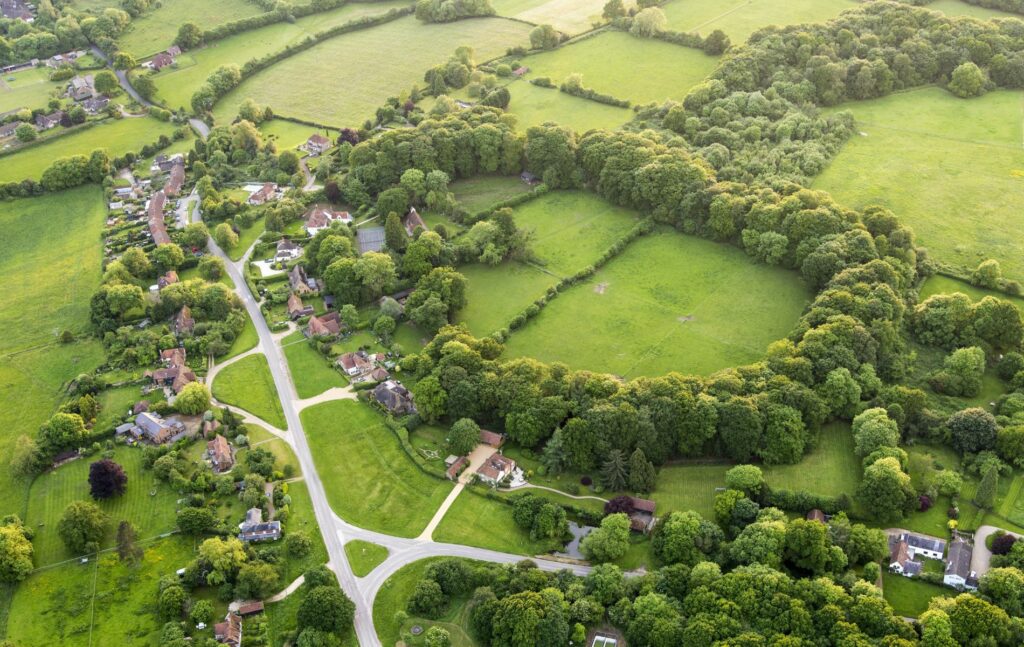
Great Missenden and the Misbourne valley
The A413 and the Chiltern line follow the Misbourne south-east from Wendover towards Amersham. Villages along this stretch pair a working station with countryside that begins at the end of the garden.
Great Missenden
Great Missenden is a Chiltern village in the Misbourne valley, known as Roald Dahl’s home for 36 years and for the museum dedicated to his work on its high street. That high street runs between Georgian and timber-framed frontages, with independent shops, a bookshop and cafés.
Housing covers 17th-century cottages, Victorian terraces and mid-century family homes, with larger detached houses along Martinsend Lane and Nags Head Lane.
The station has direct Chiltern Railways services to Marylebone, typically in around 40 to 50 minutes, which makes the village a natural starting point for anyone who needs regular days in London. Gateway School, a co-educational day school, sits in the village centre, and families comparing independent prep schools will find several more within a short drive.
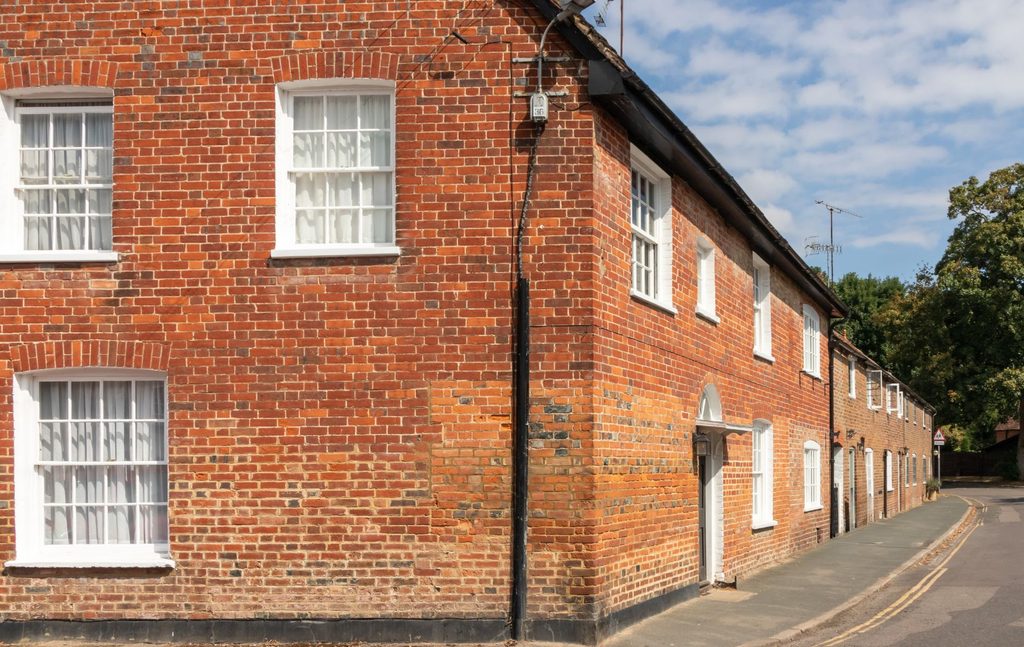
Little Missenden
Little Missenden is a small village on the River Misbourne, about two miles south-east of Great Missenden, known for its Saxon church and the festival of music and arts held there each autumn for more than half a century.
The main road was diverted around it long ago, and the Misbourne runs through as a chalk stream on its way to Shardeloes Lake.
In the Grade I listed Church of St John the Baptist, medieval wall paintings uncovered in 1931 include a large 13th-century St Christopher. The Red Lion, a regular Midsomer Murders location, and the Crown are both historic village pubs.
Housing is mostly period cottages, the manor house and a handful of substantial houses.
Prestwood
Prestwood is a sizeable village on the plateau west of Great Missenden, once known for its cherry orchards and brickmaking and now among the more practical of the villages near Great Missenden. It has its own shops, cafés, a pharmacy and an infant school, along with allotments and a nature reserve.
Homes range from 1930s houses and modern family properties to detached houses in quieter roads such as Greenlands Lane.
The high Chilterns: The Lee, Lee Common, Ballinger and Hawridge
On the high ground between Great Missenden, Wendover and Chesham, the villages thin out into commons, beech woods and cricket greens. These Chiltern villages feel far quieter than their distance from London suggests, and the price of that quiet is a short drive to the station rather than a walk.
The Lee and Lee Common
The Lee is a small Chiltern village about three miles south-east of Wendover, known for a village green laid out in its present form by Sir Arthur Lasenby Liberty, founder of Liberty of London. Liberty moved into the manor in 1890, beginning a family association with the village that continues to this day.
In 1907 he had the pub rebuilt at the corner of the green, where the Cock and Rabbit now serves as pub, restaurant and café. Two churches share one churchyard: the small 12th-century Old Church and the Victorian St John the Baptist, enlarged with Liberty funding.
The green appeared in the very first episode of Midsomer Murders, and The Lee Cricket Club and Flower Show keep the summer busy.
Lee Common, along Oxford Street within the same parish, has the community-owned Shop at The Lee, the Parish Hall, a Church of England school and the Jubilee Well of 1897. Property ranges from brick and flint cottages to Liberty-era estate houses, Arts and Crafts country houses and farmhouses. Great Missenden and Wendover stations are both a short drive.
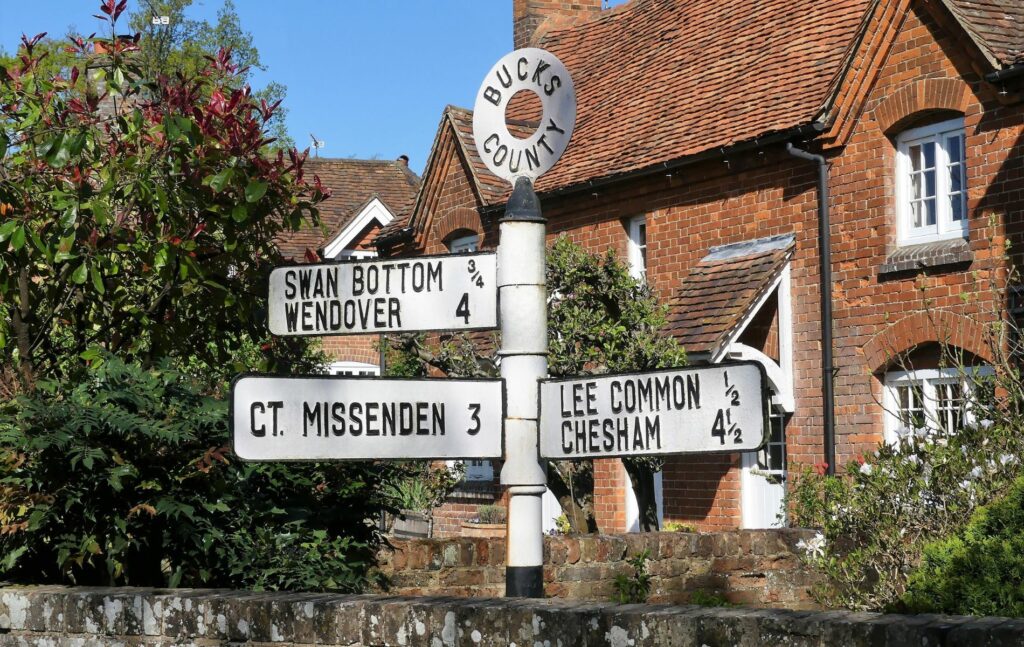
Ballinger
Ballinger is a hamlet and common on the high ground just north-east of Great Missenden, known locally for Ballinger Waggoners Cricket Club. The club runs men’s and women’s teams and a large junior section with a strong girls’ side, and holds ECB Clubmark accreditation, something parents of young cricketers will want to know.
The War Memorial Hall sits at the centre, and the horticultural society, Arts Society and Women’s Institute keep the calendar full. Great Missenden station is roughly a mile and a half away.
Hawridge
Hawridge is a small village on the Chiltern ridge north of Chesham, on the Hertfordshire border, known for the open commons it shares with neighbouring Cholesbury. It is one of the four Hilltop Villages of Cholesbury-cum-St Leonards parish, a name used locally for Hawridge, Cholesbury, St Leonards and Buckland Common.
The Full Moon, thought to have been an alehouse since the late 17th century, faces the common with a Victorian windmill, now a private house, rising behind it. The Iron Age hillfort of Cholesbury Camp is close by, Hawridge and Cholesbury Church of England School is in the village, and cyclists gather at the Chiltern Velo café.
Chesham’s Metropolitan line station is a short drive, with Tring and Berkhamsted just over the border for Euston.
The Chalfonts and Latimer
The two Chalfonts are among the larger villages in Buckinghamshire, and for many of the families we advise, Buckinghamshire’s selective grammar schools are part of the reason to look here. Latimer, a few miles north in the Chess valley, is a different proposition.
Chalfont St Giles
Chalfont St Giles is a village in the lower Misbourne valley, known for Milton’s Cottage, where John Milton completed Paradise Lost. At its centre is a green and duck pond framed by period buildings, with independent shops, a bakery and cafés along the high street.
Housing ranges from Grade II listed cottages near the centre to mid-century and later detached houses along Deanway and Narcot Lane, with more secluded homes in neighbouring Jordans. Chalfont & Latimer and Seer Green & Jordans stations are each a short drive.
Chalfont St Peter
Chalfont St Peter is a large village on the River Misbourne, south of Chalfont St Giles, known for the open ground of Gold Hill Common and a wide range of everyday amenities. Property runs from 1930s houses and bungalows to larger detached homes in areas such as Austenwood and Nicol Road.
The Chalfonts Community College, a state secondary, is in the village. Gerrards Cross station, under two miles away, has Chiltern Railways services to Marylebone typically in around 20 to 30 minutes, and the M40 and M25 are within easy reach.
Latimer
Latimer is a small estate village on the slopes of the Chess valley near the Hertfordshire border, known for the Grade II listed Latimer House, now a hotel and conference venue set in historic parkland. Cottages gather around a small green, and footpaths follow the River Chess to Chenies.
There is little in the village itself, so Little Chalfont and Chorleywood supply shops and schools. Housing is varied: period cottages, converted farm buildings and individual houses along the lanes, some with long views across the valley. Chalfont & Latimer station offers both Chiltern Railways and the Metropolitan line.
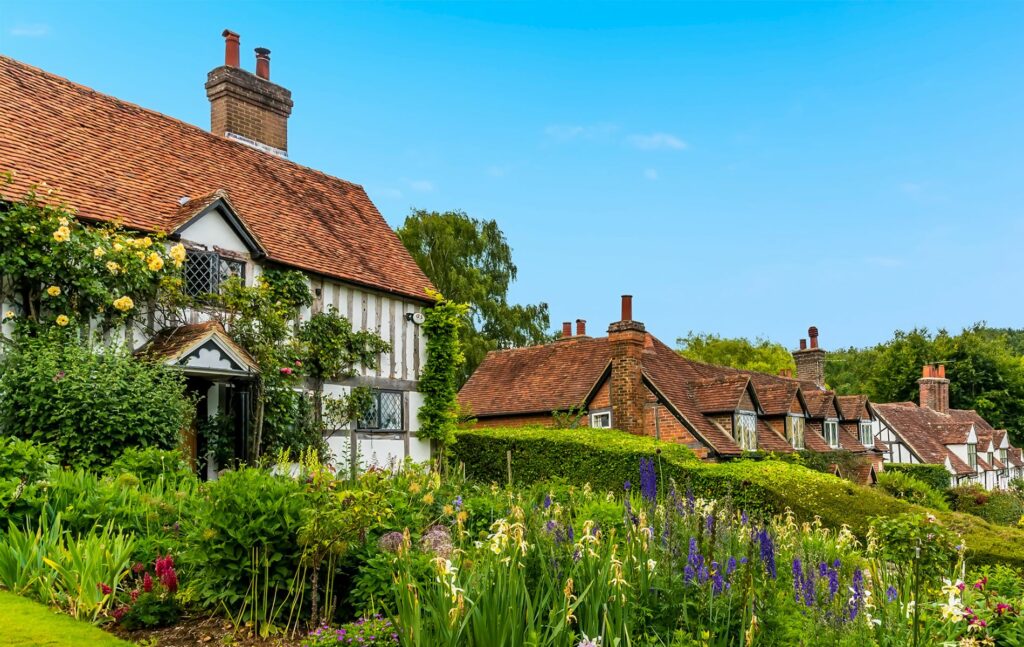
Between Beaconsfield and Amersham: Penn and Coleshill
Penn
Penn is a Chiltern village on high ground between Beaconsfield and High Wycombe, known for its elevated position and the woodland that surrounds it. A convenience store, pubs and walks across common land cover the essentials, with Beaconsfield providing a wider choice.
Housing includes period cottages around the green, mid-century homes, and larger detached properties around Beacon Hill and Hammersley Lane. Tylers Green First School and Tylers Green Middle School serve the area, and Beaconsfield station is a short drive.
Coleshill
Coleshill is a small hilltop village between Amersham and Beaconsfield, known for its green and pond and for All Saints Church, built in 1861. The Red Lion, a village hall and a busy roster of clubs support a close community, and a 19th-century tower windmill stands on the edge of the village.
Housing mixes period cottages with later detached homes, many with wide views, and Amersham station is a short drive.
The Vale of Aylesbury: Cuddington
Cuddington is a village in the Vale of Aylesbury, between Aylesbury and Thame, known for its thatched cottages, its green and its frequent appearances in Midsomer Murders. The village shop, the thatched Crown, now owned by the community, and Bernard Hall, which hosts film nights and talks, anchor village life.
Property includes 17th-century timber-framed houses, cottages of witchert and brick, and more recent detached homes on quiet lanes. Haddenham & Thame Parkway is around ten minutes by car, with Chiltern Railways services to Marylebone typically in around 35 to 45 minutes.
Further villages in Buckinghamshire worth knowing
Further west, towards Henley, Thame and Princes Risborough, lie several villages often cited among the prettiest villages in Buckinghamshire. Hambleden, a brick and flint village in the Hambleden Valley between Henley and Marlow, has been much used by film makers and is enclosed on every side by wooded Chiltern slopes.
A few miles up the same valley, the neighbouring villages of Turville and Fingest share that setting: Fingest’s Norman church has an unusual twin-gabled tower, and Cobstone Windmill looks down on Turville from the ridge above.
Long Crendon, a large village near Thame, is known for its timber-framed and thatched houses and a medieval Courthouse cared for by the National Trust, while Bledlow sits quietly beneath the Chiltern escarpment, close to the Ridgeway and Princes Risborough.
Villages in Buckinghamshire: finding the right one
There is no single list of the best villages to live in Buckinghamshire. The right one depends on how a household wants to live: a walk to the station, a cricket green beyond the garden gate, a thatched lane in the Vale.
Not every house in these villages is openly marketed, and some change hands through quiet introductions rather than listings.
Sophie Ellam, Garrington’s Buckinghamshire property finder, lives in a Chilterns village herself and advises buyers on where to look and how to secure the right property in Buckinghamshire. If you are considering one of the villages in Buckinghamshire, we would welcome a conversation about your search.
Frequently asked questions
What are the best villages to live in Buckinghamshire?
It depends on priorities. For rail access to London, Great Missenden, Chalfont St Giles and Chalfont St Peter are natural starting points; for countryside and community, The Lee, Ballinger and Hawridge on the high Chilterns; for period character in the Vale of Aylesbury, Cuddington and Long Crendon. A buying agent can match a shortlist to schooling, commute and property type.
What is the prettiest village in Buckinghamshire?
There is no single answer, but villages often cited include Hambleden, Turville, Fingest, The Lee with its Liberty-era green, Little Missenden on the River Misbourne and Cuddington in the Vale of Aylesbury.
Which village in the Chilterns is considered the prettiest?
Hambleden and Turville in the southern Chilterns are frequently named, along with The Lee, whose green was shaped by Arthur Lasenby Liberty, and the brick and flint villages of the Misbourne valley.
What are the major towns in Buckinghamshire?
Aylesbury is the county town. Other significant towns include High Wycombe, Amersham, Beaconsfield, Marlow and Buckingham. Milton Keynes lies within the ceremonial county but has its own unitary council.
Which Buckinghamshire villages have a railway station?
Several villages have their own station, including Great Missenden, Little Chalfont (Chalfont & Latimer), Seer Green (Seer Green & Jordans) and Haddenham (Haddenham & Thame Parkway). Others, such as Chalfont St Giles, Latimer and The Lee, are a short drive from Chiltern Railways or Metropolitan line stations, with services to London Marylebone or Baker Street.